How Often Does an RTO Need to Conduct Assessment Validation?
Key takeaways
- 1Validation must be systematic, ongoing and risk-based—not on a fixed annual cycle
- 2High-risk factors include new qualifications, new tools, new trainers, high-volume enrolments and previous audit findings
- 3New training products and assessment tools must be validated before first use
- 4Validation evidence must show outcomes and actions, not just attendance or scheduling
- 5A calendar without outcomes is not validation—ASQA expects clear improvements
Table of contents
- Why ASQA Cares About Validation Frequency
- What the Standards Actually Require
- What "Risk-Based Validation" Means in Practice
- A Practical Validation Frequency Guide
- What ASQA Expects to See as Evidence
- Common Validation Failures
- What Good Validation Looks Like
If validation only happens once a year or just before audits, ASQA will view this as non-compliant.
Why ASQA Cares About Validation Frequency
Under the 2025 Standards, validation is a quality control system, not an administrative task.
ASQA uses validation evidence to test whether:
- Assessment decisions are consistent
- Tools remain fit for purpose
- Risks are identified early
- Improvements are made before students are impacted
Infrequent validation signals unmanaged risk.
What the Standards Actually Require
The Standards do not prescribe a single timeframe.
They require that:
- Validation occurs before and after assessment use
- Validation is planned and systematic
- High-risk areas are validated more often
- Outcomes inform continuous improvement
Compliance depends on how you validate, not how often you schedule it.
What "Risk-Based Validation" Means in Practice
ASQA expects RTOs to validate more frequently where risk is higher.
High-risk factors include:
- New qualifications or units
- New assessment tools
- New trainers or assessors
- High-volume enrolments
- Poor student outcomes
- Previous audit findings
Low-risk units may require less frequent review.
A Practical Validation Frequency Guide
Use this as a baseline, then adjust for risk.
| Scenario | Minimum Expectation |
|---|---|
| New training product | Before first use |
| New assessment tool | Before first use |
| High-risk units | Within 6–12 months |
| Moderate-risk units | Within 12–18 months |
| Low-risk units | Within 18–24 months |
| After incidents or complaints | As required |
If frequency does not match risk, findings are likely.
What ASQA Expects to See as Evidence
Validation evidence must show:
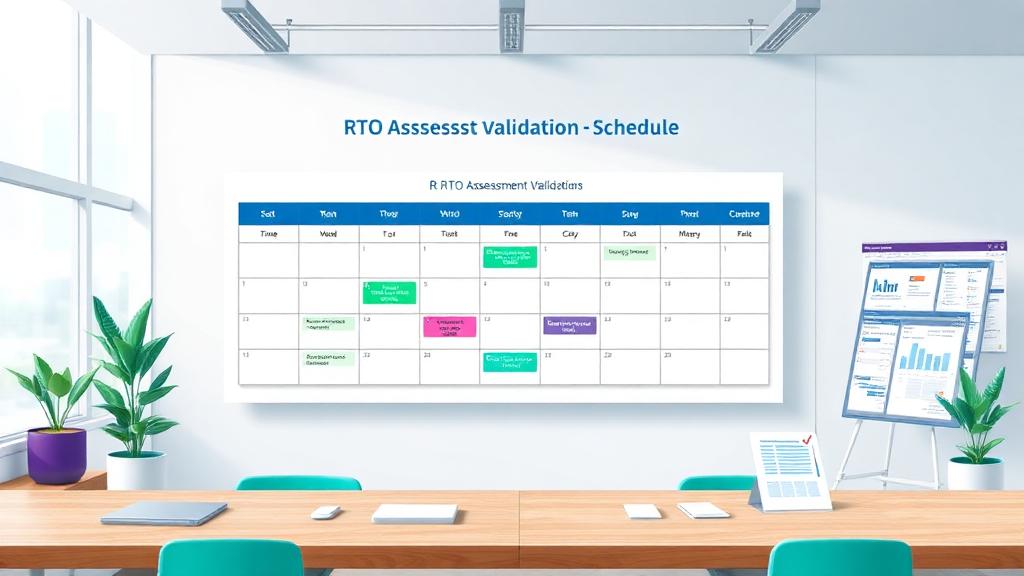
- A planned validation schedule
- Tools selected based on risk
- Qualified validators involved
- Clear outcomes recorded
- Actions assigned and completed
- Tools updated where required
A calendar without outcomes is not validation.
Common Validation Failures
ASQA often finds:
| Failure | Impact |
|---|---|
| Same tools validated repeatedly | No quality improvement |
| No link between validation and improvement | Tick-box compliance |
| Validation after audit notification | Suggests non-genuine compliance |
| Validation panels with no industry input | Reduced credibility |
| No tracking of actions | Incomplete improvement cycle |
These signal compliance theatre.
What Good Validation Looks Like
Audit-ready RTOs can:
- Explain why each tool was validated
- Show how risk informed timing
- Produce outcomes, not opinions
- Prove actions were implemented
- Demonstrate assessment quality improved
Auditors recognise this immediately.
A Simple Way to Get Validation Right
If your validation feels ad hoc or reactive, fix the system.
The Assessment Validation service helps you:
- Schedule validation by risk
- Record outcomes clearly
- Track actions to closure
- Demonstrate continuous improvement
Strong validation reduces audit exposure and protects scope.
Related reading
- What Makes an Assessment Tool Compliant Under Standards 1.3–1.5?
- What Are the Most Common ASQA Audit Findings in 2025?
- What Evidence Does ASQA Expect to See During an RTO Audit?
Need help with your validation schedule?
If your validation approach needs strengthening, a Clarity Call can help you build a risk-based system that meets ASQA expectations.
FAQs
Is there a mandatory validation cycle for RTOs?
No. The Standards require systematic, risk-based validation rather than a fixed annual cycle. Frequency should match the risk profile of each training product.
What counts as a high-risk unit for validation?
High-risk factors include new qualifications, new assessment tools, new trainers, high-volume enrolments, poor student outcomes, or previous audit findings.
Can I validate the same tools every year?
ASQA expects validation to rotate across your scope and to produce genuine improvements. Validating the same tools repeatedly without change may be questioned.
What if I only have a small scope?
Even small-scope RTOs should validate based on risk. New tools or trainers may require more frequent validation regardless of scope size.
Get new posts in your inbox
RTO compliance insights, governance guidance, and 2025 Standards updates — delivered directly to you.
How audit-ready is your RTO?
Complete our free 5-minute Standards Scorecard and get a personalised gap analysis.