Season 6 · Episode 8
Outcome Accountability What CEOs Need to Know About the 2025 Standards
A CEO doesn't need to run every compliance task, but they do need to know whether the system is working. This episode shows what useful oversight looks like and how leaders can demonstrate it through the decisions they make.
25 February 20269:11

Listen to this Episode
Available on all podcast platforms
Show Notes
- Angela distinguishes oversight from micromanagement. Leaders need to know whether the controls work and what outcomes they are producing, without writing every policy, running every audit or validating assessments themselves.
- Leaving quality with one compliance officer obscures problems until they become urgent. Angela discusses the signs of disconnected governance, including missing updates, improvement actions staying at the operational level, and executives unable to locate important evidence.
- A short leadership dashboard can bring risks and outcomes into the same view. The examples cover learner progression and completion, complaints, validation, trainer currency and gaps in the evidence.
- Regular governance meetings give the dashboard a purpose: review changes, agree actions, decide what needs escalation and record what evidence informed the decision.
- Knowing where the evidence lives is a practical test of visibility. Angela discusses executives being able to find the compliance calendar, evidence map, improvement records and internal audit report without taking over the team's work.
- The case discussion illustrates a practical change: give executives a clearer reporting line into quality and risk, and put the information on the leadership agenda rather than assuming it is covered elsewhere.
Key Takeaways
- Ask your senior team to name the top three quality risks and point to current evidence for each. Treat gaps in their answers as a reporting problem to solve, not a reason to centralise every task.
- Bring a one-page dashboard to the next leadership meeting. Include the trend, owner, action or decision needed, and the evidence behind it for each issue you raise.
- Record the reason for one quality or risk decision in the minutes, along with the action owner and the date leadership will review whether it worked.
- Ask a director or CEO to locate the current risk register, validation summary and evidence map unaided. Give them a reliable route back to anything they can't find.
- When a milestone is marked complete, ask what has changed for learners, trainers or the RTO, and what evidence shows it. Bring unresolved questions back to leadership.
Listen On
More Episodes
Continue exploring RTO compliance topics
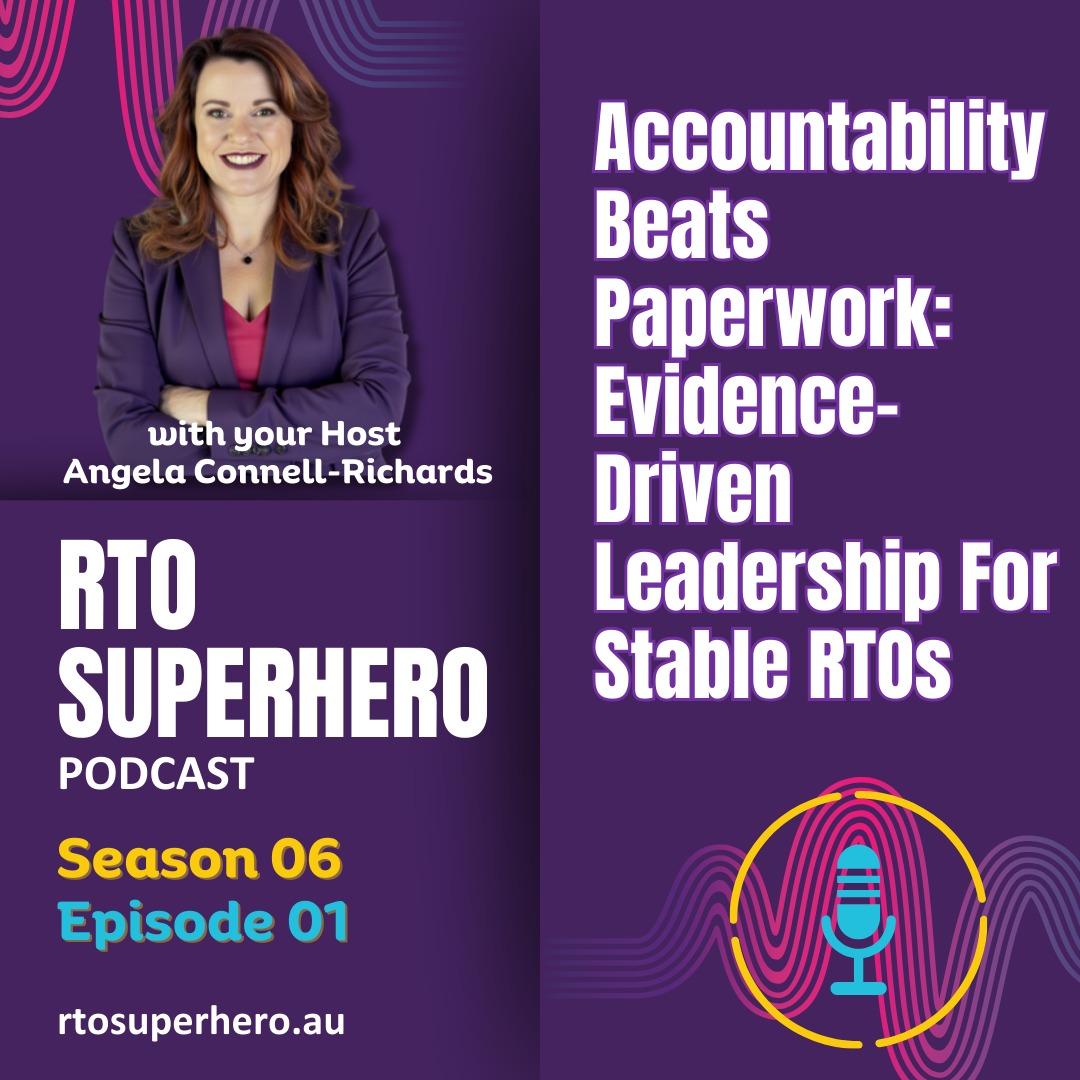
7 January 2026
Accountability Beats Paperwork: Evidence-Driven Leadership For Stable RTOs
Compliance doesn't live in a policy folder; it lives in leadership. We dive into the shift to outcome standards and show why executives must own decisions, track actions, and bring evidence to every review.
Listen Now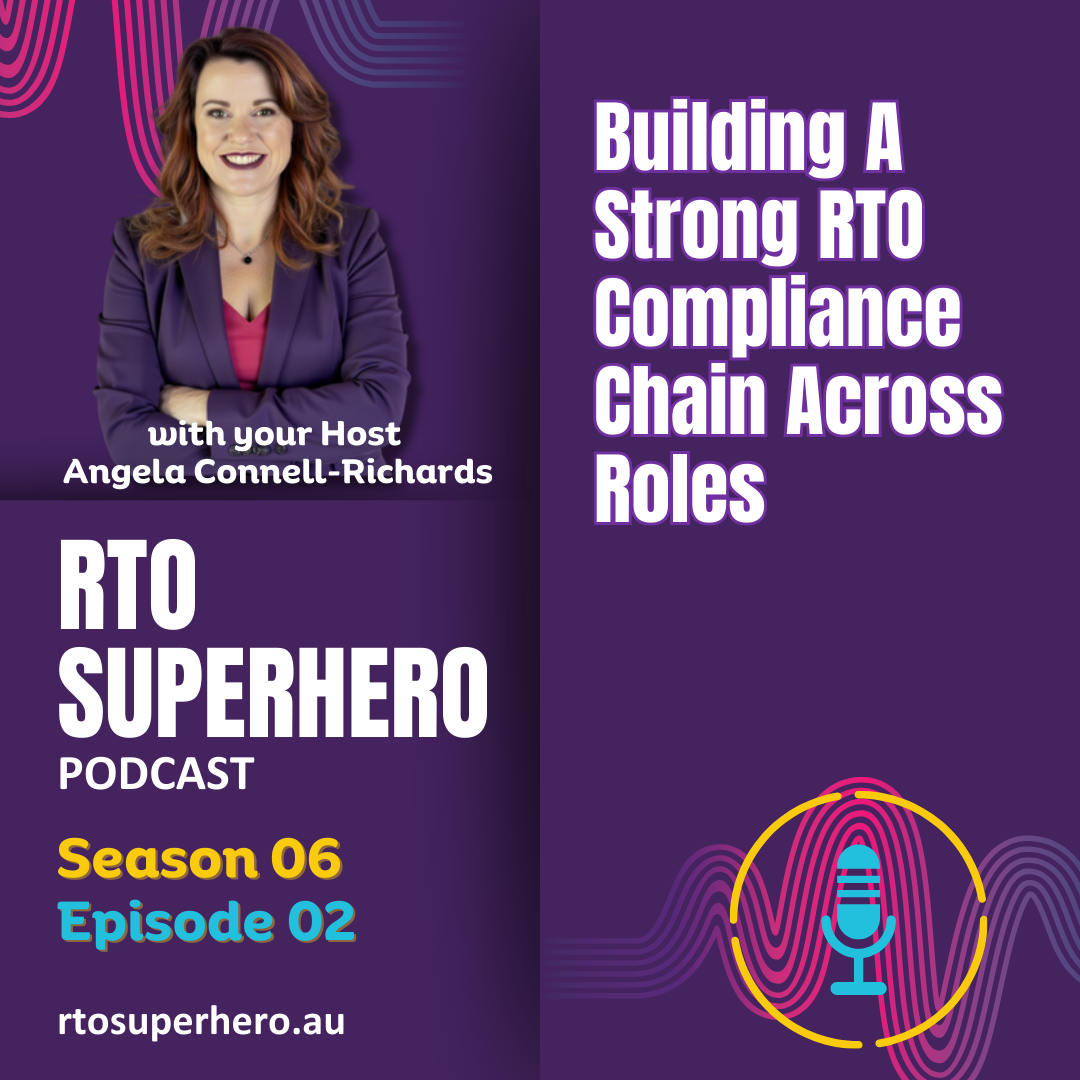
14 January 2026
Building A Strong RTO Compliance Chain Across Roles
Clear roles create clear compliance. Learn how to assign and track responsibilities.
Listen Now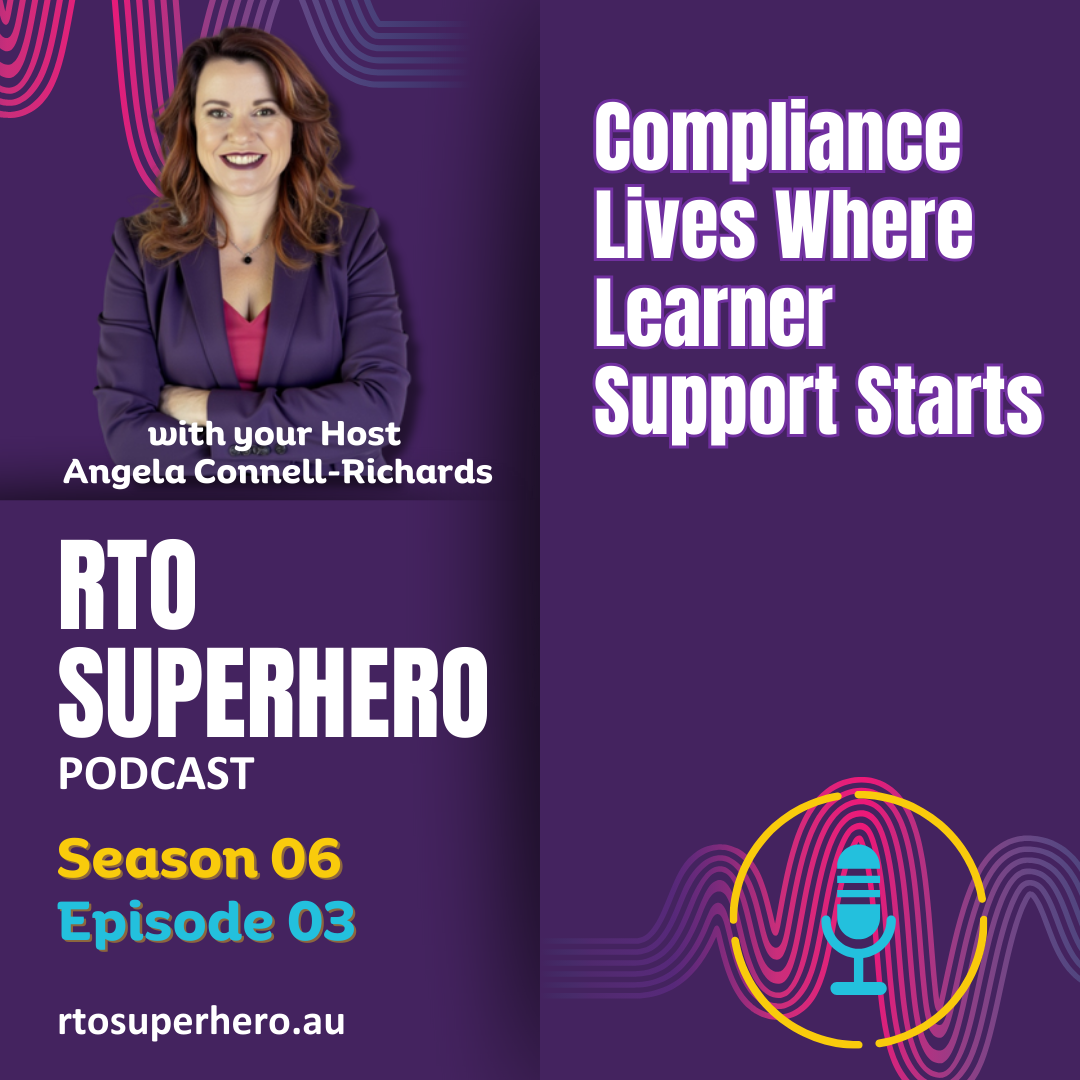
21 January 2026
Compliance Lives Where Learner Support Starts
Learner support isn't just pastoral care—it's the foundation of compliant training delivery.
Listen Now