Implementing a Self-Assurance Framework Under the Standards for RTOs 2025
Key takeaways
- 1Self-assurance is the central regulatory shift in the Standards for RTOs 2025 — ASQA expects RTOs to prove ongoing compliance through their own systems, not just at audit.
- 2A working framework has five components: governance oversight, risk identification, evidence linkage, continuous improvement, and reporting.
- 3Manual checklists and spreadsheet registers do not meet the intent of self-assurance because they cannot demonstrate a live evidence trail.
- 4Governing Persons carry personal responsibility for self-assurance under the 2025 Standards and must review evidence, not just outcomes.
- 5An evidence-linked system such as ComplyHub gives Compliance Managers a defensible audit trail and reduces reactive audit preparation.
Self-assurance is no longer optional. Under the Standards for RTOs 2025, ASQA expects every RTO to demonstrate ongoing, evidence-based control of its own compliance — not a once-a-year scramble to prepare for audit. This pillar guide walks Compliance Managers through what a self-assurance framework actually looks like, why manual checklists fall short, and how to build a defensible, evidence-linked model in time for the transition deadline.
Table of contents
- What self-assurance means under the 2025 Standards
- Why manual checklists no longer meet the intent
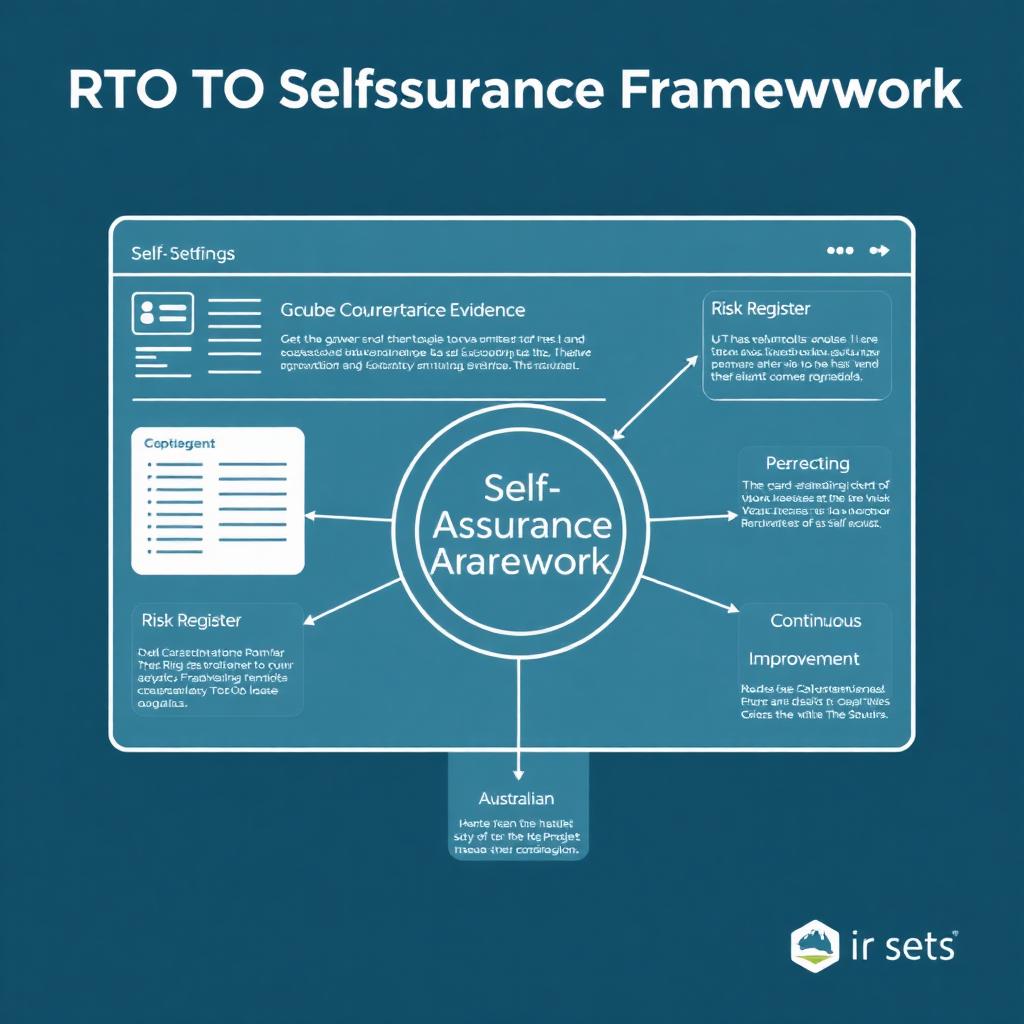
- The five components of a working self-assurance framework
- Governing Person responsibilities
- Evidence linkage: the practical shift
- Reporting rhythm and continuous improvement
- How ComplyHub supports self-assurance
- Getting ready for the transition period
1. What self-assurance means under the 2025 Standards
Self-assurance is the requirement that your RTO can identify, assess, and address risks to the quality of training and assessment on an ongoing basis — and prove it with evidence. ASQA's regulatory approach has shifted from point-in-time audit checks to continuous oversight. The Standards for RTOs 2025 formalise this expectation across the Outcome Standards, Compliance Requirements, and Credential Policy.
In practice, self-assurance asks three questions of every RTO:
- Do you know what could go wrong across training, assessment, workforce, and governance?
- Do you have systems that detect and address issues as they emerge?
- Can you produce the evidence that shows those systems are working?
Use the compliance examples, known risks and self-assurance questions in the ASQA Practice Guides to structure your review.
2. Why manual checklists no longer meet the intent
Spreadsheets, Word registers, and static checklists were designed for a compliance-by-exception model — tick the box, file the folder, move on. They fail the self-assurance test because they:
- Do not link decisions to underlying evidence
- Cannot show when an issue was identified, addressed, and reviewed
- Rely on one person's memory or file structure
- Provide no audit trail of governance oversight
Self-assurance is a live evidence model. Checklists are a snapshot.
3. The five components of a working self-assurance framework
A self-assurance framework does not need to be complex, but it must contain all five of the following components to align with the 2025 Standards.
1. Governance oversight — Governing Persons receive structured, evidence-linked reports and record decisions in minutes that reference source documents.
2. Risk identification — A live risk register that captures training, assessment, workforce, financial, and reputational risks with owners, treatments, and review dates.
3. Evidence linkage — Every compliance claim is traceable to a source: validation records, trainer files, complaint logs, moderation notes, PD records, and student outcome data.
4. Continuous improvement — Issues, complaints, and validation findings feed a closed-loop improvement register with actions, owners, and verification.
5. Reporting — Regular, structured reporting to the Governing Persons and, when required, to ASQA through the Annual Declaration on Compliance.
4. Governing Person responsibilities
The 2025 Standards place personal responsibility on Governing Persons to actively assure themselves that the RTO is meeting its obligations. This is not a delegation to the Compliance Manager. Governing Persons must:
- Review evidence, not just summaries
- Test the effectiveness of controls
- Challenge assumptions in reports
- Record their oversight in meeting minutes
Compliance Managers support this by preparing evidence-linked reports that make it easy for Governing Persons to demonstrate active oversight.
5. Evidence linkage: the practical shift
The single largest operational change under self-assurance is evidence linkage. Instead of storing evidence in one location and decisions in another, the two must be connected.
A practical example: a validation activity is recorded in the validation schedule, the validation report is attached, the findings are logged in the continuous improvement register, actions are assigned to owners, and the outcome is reported to the next governance meeting. Each step references the previous one. This is the audit trail ASQA is looking for.
6. Reporting rhythm and continuous improvement
A defensible reporting rhythm typically looks like:
- Monthly — operational compliance dashboard, risk register review, complaints and incidents
- Quarterly — governance meeting with evidence pack, validation progress, workforce currency
- Annually — self-assurance review, Annual Declaration on Compliance, strategic risk reassessment
Continuous improvement is not an annual event. Every complaint, validation finding, and internal audit action should feed the improvement register and be tracked through to verification.
7. How ComplyHub supports self-assurance
ComplyHub is designed to support the self-assurance model rather than replace it with another checklist. The system provides:
- A live risk register linked to controls and evidence
- Validation, moderation, and trainer currency tracking with evidence attached
- A continuous improvement register that closes the loop from issue to verification
- Governance reporting that Governing Persons can review with confidence
- An audit trail that shows when evidence was created, reviewed, and acted on
The intent is to reduce reactive audit preparation and give Compliance Managers a defensible system that supports — not replaces — professional judgement.
8. Getting ready for the transition period
Compliance Managers preparing for the transition should:
- Map current evidence sources against the five components above
- Identify gaps where evidence exists but is not linked to a decision
- Establish a governance reporting rhythm with evidence-linked packs
- Move risk, validation, and improvement registers off spreadsheets into a live system
- Brief Governing Persons on their personal self-assurance responsibilities
Self-assurance is not a project with an end date. It is an operating model. The RTOs that adopt it early will find audits easier, decisions clearer, and reputational risk lower.
Next step
If you are building or reviewing your self-assurance framework, book a Compliance Clarity Call to map your current evidence against the Standards for RTOs 2025, or start a ComplyHub trial to see how an evidence-linked system supports the model in practice.
Get new posts in your inbox
RTO compliance insights, governance guidance, and 2025 Standards updates — delivered directly to you.
See ComplyHub in action
Watch how RTOs use ComplyHub to manage compliance evidence, TAS documents, and audit preparation.
Related Articles

Why Every RTO Needs a Solid RTO Governance Framework — Before ASQA Comes Knocking
Standards for RTOs 2025: The Complete Transition Guide for Australian RTOs
