Your Trainers Are Not Your Biggest Asset. Your Capability System Is.
Key takeaways
- 1Individual trainers are important, but capability systems that develop and sustain workforce strength are what create long-term organisational performance.
- 2Workforce challenges in the VET sector — recruitment, industry currency, retention, and succession — affect every aspect of RTO performance.
- 3Capability extends far beyond formal qualifications to include technical expertise, communication, leadership, critical thinking, and continuous learning.
- 4When capability depends entirely on individual effort, organisations become vulnerable to inconsistency, knowledge isolation, and succession risk.
- 5Leadership & Workforce Capability is the second Critical Driver because people deliver every outcome; but they can only perform at their best with effective systems and leadership support.
For years, organisations have repeated the same phrase:
"People are our greatest asset."
While well intentioned, the statement is only partially true.
People are important.
But people alone do not create sustainable organisational performance.
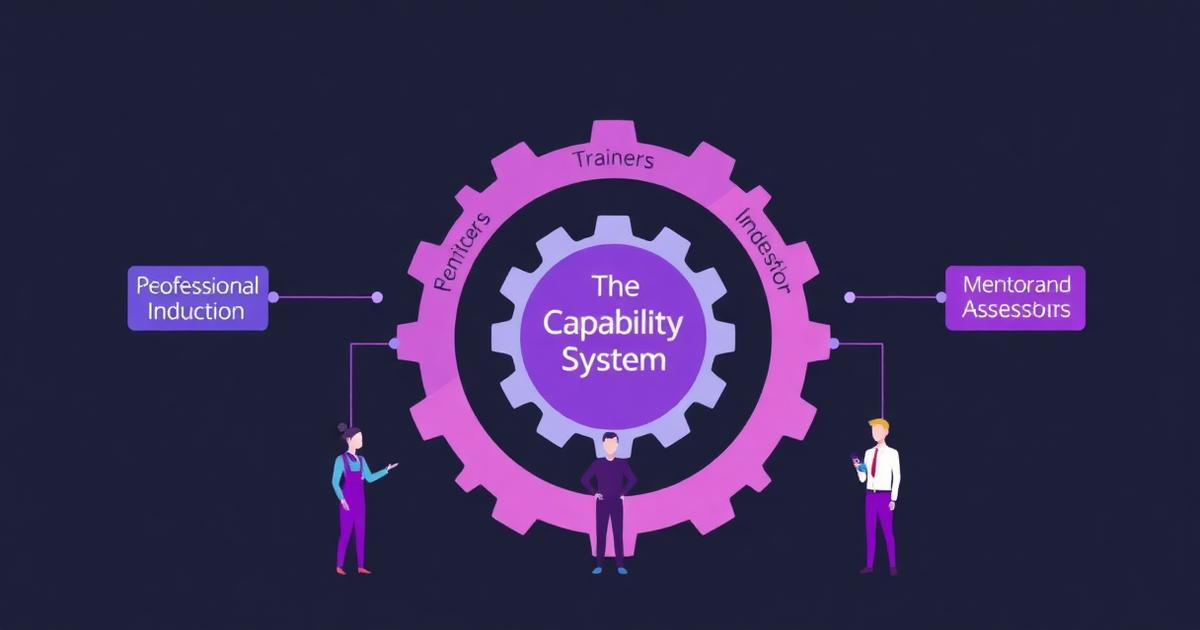
What truly drives success is the system that develops, supports, and strengthens those people over time.
In other words, your capability system is your greatest asset.
Table of contents
- The workforce challenge facing RTOs
- Capability is more than qualifications
- Why systems matter
- The leadership responsibility
- The second critical driver
- Building capability for the future
- Want to build a workforce capable of driving success?
The workforce challenge facing RTOs
The vocational education sector continues to face significant workforce challenges.
Many organisations struggle with:
- Recruiting qualified trainers and assessors
- Maintaining industry currency
- Staff retention
- Professional development
- Leadership succession
- Capability gaps in specialist areas
These challenges affect every aspect of organisational performance.
- Student outcomes
- Compliance outcomes
- Industry engagement
- Operational effectiveness
- Financial sustainability
The question is no longer whether workforce capability matters.
The question is how organisations develop and sustain it.
Capability is more than qualifications
Many organisations focus heavily on credentials.
Qualifications are important.
However, capability extends far beyond formal qualifications.
High-performing staff demonstrate:
- Technical expertise
- Industry knowledge
- Communication skills
- Leadership capability
- Critical thinking
- Adaptability
- Continuous learning
Strong organisations create environments where these capabilities can grow.
Why systems matter
When capability depends entirely on individual effort, organisations become vulnerable.
- Performance varies between staff members
- Knowledge remains isolated
- Succession becomes difficult
- Organisational learning slows
Effective capability systems solve these problems.
They create consistent approaches to:
- Recruitment
- Induction
- Professional development
- Performance review
- Mentoring
- Leadership development
- Knowledge sharing
The result is a workforce that continues to improve over time.
The leadership responsibility
Workforce capability is not solely an HR issue.
It is a governance issue.
Leaders influence:
- Workforce planning
- Capability priorities
- Professional development investment
- Succession planning
- Organisational culture
Strong leaders understand that workforce capability directly influences organisational outcomes.
They view capability as a strategic investment rather than an operational expense.
👉 Why some RTOs thrive while others constantly struggle
The second critical driver
In The Governance Shift, Leadership & Workforce Capability is identified as the second Critical Driver of Success.
This driver recognises that people deliver every outcome an organisation achieves.
The strongest systems, policies, and technologies cannot compensate for capability gaps.
Equally, capable people can only perform at their best when supported by effective leadership and development systems.
The organisations that thrive over the long term understand this relationship.
Building capability for the future
The future of vocational education will demand new skills, new technologies, and new approaches.
Organisations that invest in capability today will be better positioned to adapt tomorrow.
The question leaders should ask is simple:
Are we building a workforce capable of meeting future challenges, or are we simply managing today's workload?
The answer may determine the long-term success of the organisation.
Want to build a workforce capable of driving success?
The Governance Shift explores Leadership & Workforce Capability as one of the 8 Critical Drivers of Success and provides practical strategies for developing stronger organisations.
👉 Order your copy today and discover how capability becomes a competitive advantage.
Written by Angela Connell-Richards, CEO & Founder, Vivacity Coaching & Consulting and ComplyHub.ai
Get new posts in your inbox
RTO compliance insights, governance guidance, and 2025 Standards updates — delivered directly to you.
Upskill your team
Access structured PD programs designed specifically for VET trainers and compliance staff.
Related Articles

What Qualifications Must Trainers and Assessors Hold in 2025?
VET Workforce Management: What ASQA Expects from RTOs
